Do not buy a story instead of a business.
We review the stated asset, owners and authority, financial and operational rationale, rights to technology, intermediaries, dependencies, disputes and limitations.
Review a businessIs the information on the project, participants, resources, documents, risks and assumptions sufficiently structured for the next decision?
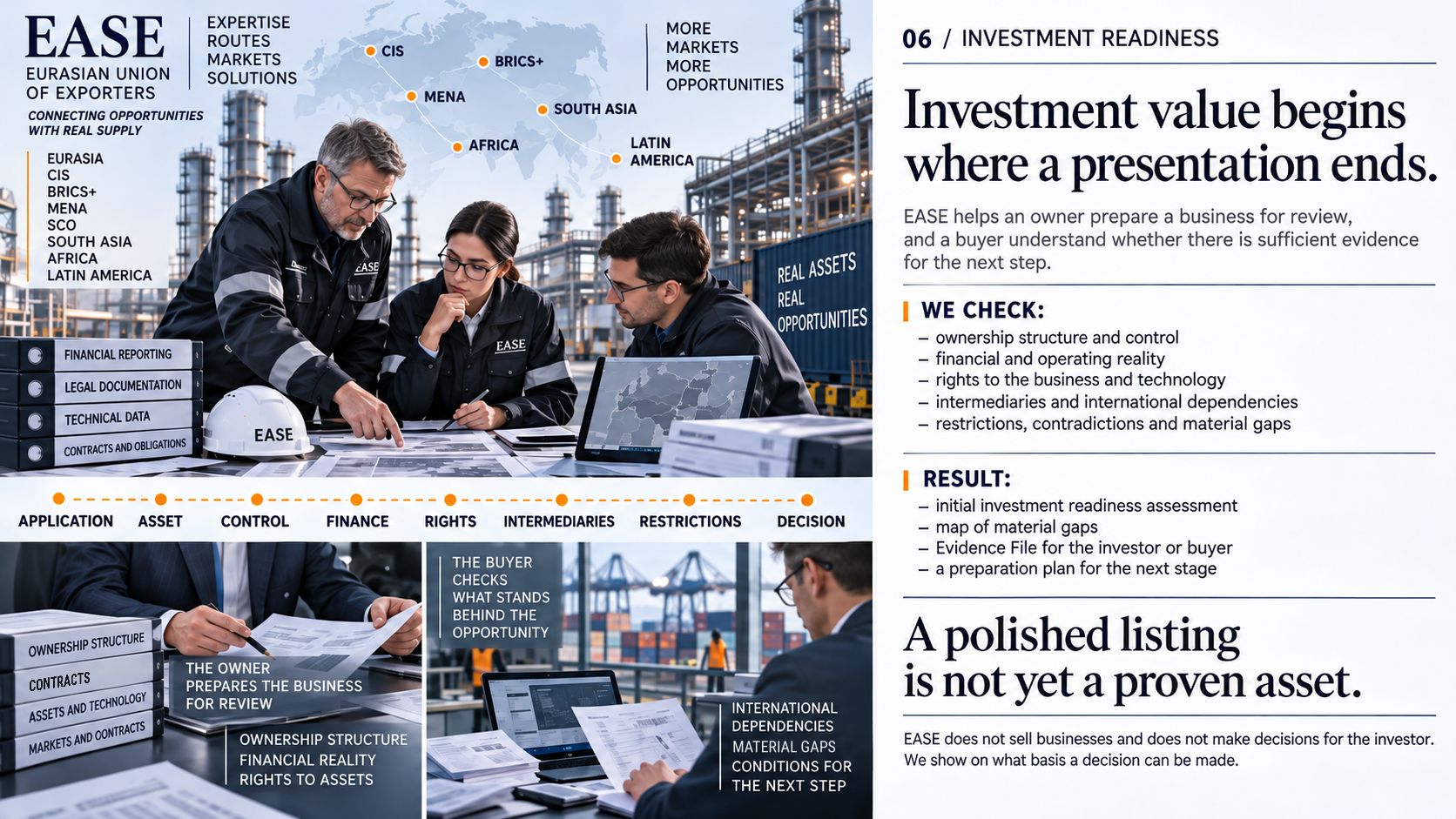
Investment readiness begins where the presentation ends and review of the underlying grounds begins.
EASE works on both sides of the investment discussion: helping an owner prepare a business for rigorous review, and helping an investor or buyer avoid mistaking a presentation for an evidenced asset.
The review focuses on what is material to the specific decision: who the party is, what exactly is being sold or financed, the basis for the figures and which conditions cannot be left out of account.
We review the stated asset, owners and authority, financial and operational rationale, rights to technology, intermediaries, dependencies, disputes and limitations.
Review a businessWe help distinguish the operating asset from its promotional description, assemble supporting evidence and identify gaps before the buyer does.
Prepare a businessAn asset, resource, metric, right, contract, market or growth assumption.
A document, register, contract, or financial or operational basis with a date.
A gap between the presentation, rights, resources, figures and actual performance.
A condition for proceeding, a further question, a pause or re-verification.
EASE does not sell businesses, raise capital or guarantee a positive outcome. EASE makes the gap between an assertion and its evidence visible.
EASE does not determine market value, act as an investment adviser, broker or financial intermediary, accept funds, or promise a sale, financing or return. The decision remains with the parties to the transaction.

Starovagankovsky Lane · Vozdvizhenka Street
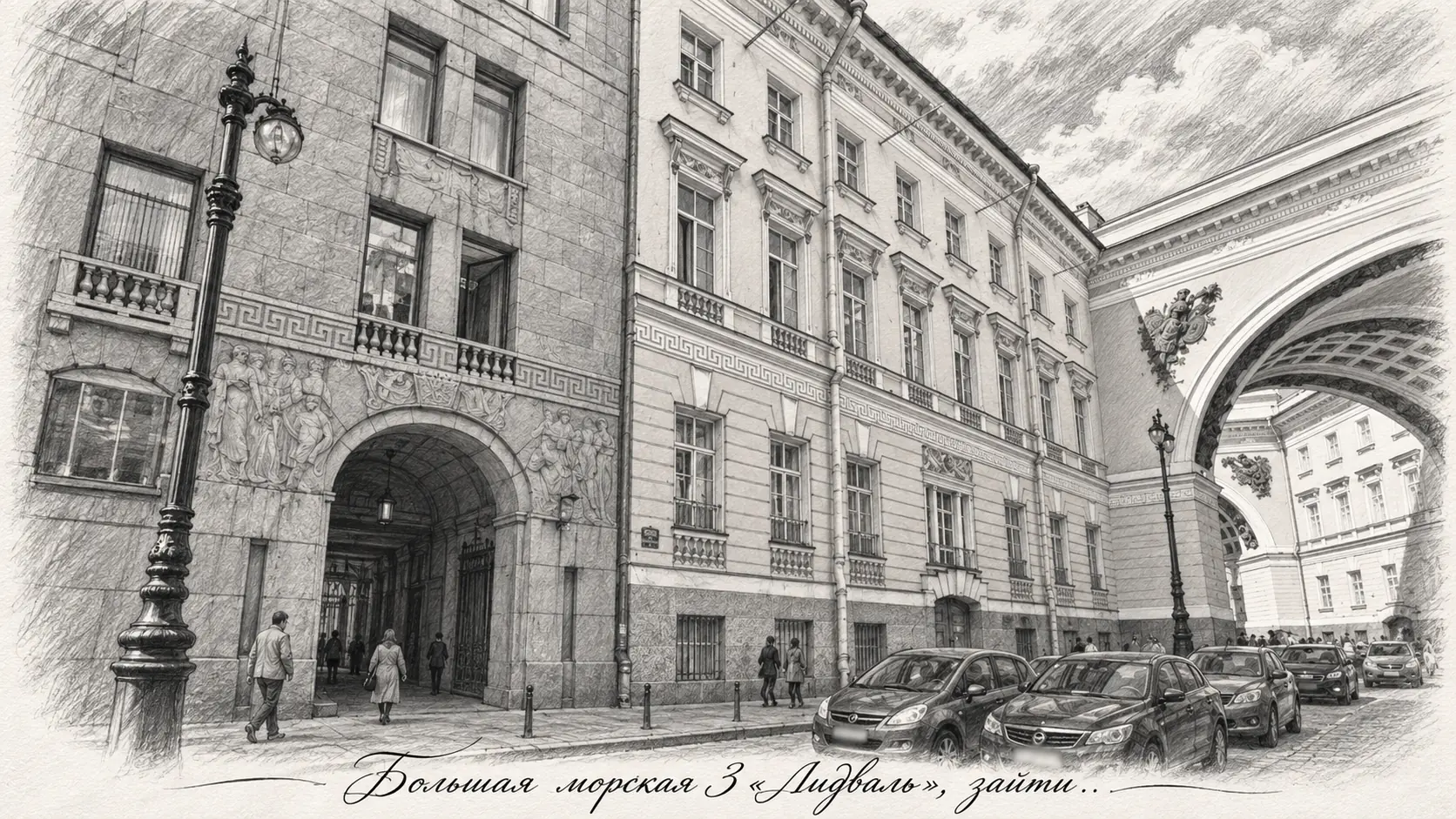
3 Bolshaya Morskaya Street